Entry · Ref IZICTQ6G
How to Choose Between a Portable and Stationary Compressor for Your Pneumatic Tools
- Posted
- 2026-11-16
- Last amended
- 2026-11-16
- Account
- @machineyard
When you rely on pneumatic tools to get work done, the compressor that feeds them is more than an accessory. It is the heart of your air system. The choice between a portable compressor and a stationary unit shapes how you work, where you work, and what you can reasonably expect from your tools. Each type has its strengths, and the right decision depends on the demands of your operation.
Compressors come in many sizes, but the most fundamental distinction is mobility. Portable compressors are built to move. They are light enough to carry from one job site to another and compact enough to store in a truck or a corner of a workshop. Stationary compressors, sometimes called base-mounted or fixed units, are larger, heavier, and intended to stay in one place. They trade portability for higher capacity, longer duty cycles, and the ability to run multiple pneumatic tools at once.
Understanding the Core Differences
Before looking at specific scenarios, it helps to understand what makes these two types fundamentally different. The main areas where they diverge are airflow rate, operating pressure, duty cycle, and receiver tank size. These technical details directly affect how well a compressor can keep up with your pneumatic tools.
Airflow rate is measured in cubic feet per minute (CFM). Pneumatic tools have a listed CFM requirement at a given operating pressure. A portable compressor often delivers between 2 and 10 CFM at 90 PSI, which is enough for a single tool like a framing nailer, a brad nailer, or an impact wrench used intermittently. Stationary compressors commonly supply 10 to 30 CFM or more, allowing them to feed a cutoff tool, a sandblaster, or multiple tools running at the same time.
Duty cycle refers to the percentage of time a compressor can run in a given period without overheating. Portables typically have a duty cycle around 50 to 60 percent, meaning they need to rest as much as they run. Stationary units often have a duty cycle of 70 to 100 percent, so they can run continuously under load. If your work involves extended operation, the stationary unit will hold up better.
Receiver tank size matters because it acts as a buffer. A portable compressor might have a one- to six-gallon tank, while a stationary unit can have twenty gallons or more. A larger tank means the compressor cycles on and off less frequently, and it can handle short bursts of high demand without dropping pressure.
When a Portable Compressor Makes Sense
Portable compressors shine in situations where the work moves. If you are a contractor who frames houses, installs trim, or does finish work across different sites, a portable unit lets you bring compressed air wherever you go. You can load it into a truck bed, carry it up stairs, and set it up in minutes.
For light-duty pneumatic tools such as staplers, brad nailers, and spray guns used in small touch-up jobs, a portable compressor provides enough airflow without excess weight. The smaller tank also means less stored energy, which can be a safety advantage in crowded or temporary workspaces.
Portable compressors are also easier to maintain in a basic sense. They have fewer parts exposed to dust and damage, and many models come with sealed bearings and splash-lubricated pumps that require minimal attention. For a one-person operation or a small crew that moves between jobs, the convenience of portability often outweighs the limitations in capacity.
When a Stationary Compressor Is the Right Fit
Stationary compressors are built for operations where air demand is steady and high. A workshop that runs multiple pneumatic tools simultaneously, such as an auto repair shop with impact wrenches, die grinders, and air hammers, will quickly overwhelm a portable unit. The pressure drop from a small tank and a low-flow compressor means tools stall, work slows, and the compressor runs constantly, shortening its life.
For industrial settings where pneumatic tools are used all day, a stationary compressor with a high CFM rating and a large receiver tank keeps the air supply stable. The longer duty cycle means the unit can run for hours without overheating. The larger tank provides a reserve that smooths out peak demands, so a spike in usage does not cause a noticeable drop in pressure.
Another advantage of stationary compressors is that they can be plumbed into a fixed air distribution system. Pipes run through the facility to drop points where you connect hoses. This eliminates the need to drag a heavy hose across the floor and reduces trip hazards. It also allows you to filter and dry the air at a central point before it reaches your tools, which is important for painting and sanding applications.
Noise is also worth considering. Stationary compressors, especially the larger reciprocating or rotary screw types, can be loud. But because they are fixed, you can install them in a separate room or a sound-dampened enclosure, running intake and discharge pipes to the outside. That keeps the work area quieter, which is hard to do with a portable unit that stays close to the tools.
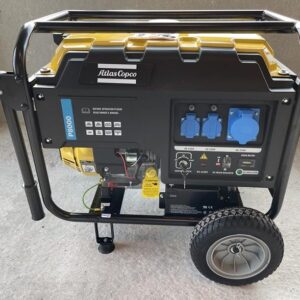
For businesses that operate from a single location, such as a fabrication shop, a woodworking studio, or a service garage, a stationary compressor from a supplier like ePowerhouse LLC can be a sound investment. It provides the capacity and reliability needed to keep pneumatic tools running through a full shift without interruption.
Key Factors to Weigh
When deciding between the two, think about your typical work pattern. If you regularly move between job sites or your work area changes, portability is a clear advantage. If you stay in one place and use multiple tools at once, stationary is the better choice.
Consider your tool list. Write down the CFM requirement for each pneumatic tool you own or plan to use. Add up the total for the tools you might run simultaneously. That number tells you the minimum CFM your compressor must deliver. Then add a margin of about 20 to 30 percent to account for leaks, future additions, and normal wear. A portable compressor that meets this number and still fits your mobility needs is fine. If the requirement exceeds what a portable can provide, a stationary unit is necessary.
Think about your duty cycle. If you only use tools for short bursts, such as fastening trim or inflating tires, a portable unit with a lower duty cycle works fine. If you are grinding, sanding, or painting for extended periods, you need a compressor with a high duty cycle to avoid overheating and premature failure.
Space matters. A stationary compressor takes up a dedicated footprint. You need a flat, level floor, adequate ventilation, and room for maintenance access. A portable compressor can be stored on a shelf or in a corner when not in use.
Power is another factor. Many portable compressors run on standard 120-volt household current. Stationary compressors often require 240 volts or three-phase power. Check your electrical service before committing to a large unit.
Making the Choice Practical
If your operation is a single trade with one person using one tool at a time, a portable compressor is almost always sufficient. It keeps your setup simple and your costs lower. If you are running a shop with two or more people, or if you use tools that demand high airflow continuously, a stationary compressor will pay for itself in reduced downtime and better tool performance.
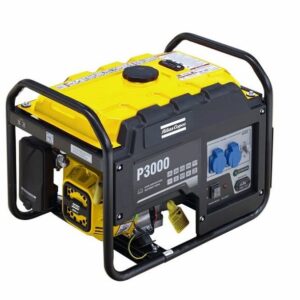
Some operations find a middle ground: a portable compressor for remote jobs and a small stationary unit for the workshop. That avoids compromise on either side. The portable handles the road work, and the stationary provides a reliable air source in the shop. This dual setup is common among contractors who also run a base operation.
Regardless of the choice, the quality of the compressor and its suitability for your tools matters more than the type label. A well-matched unit from a known industrial equipment marketplace such as ePowerhouse LLC will give you years of service, while a compressor that is too small will frustrate you every time you pull the trigger on a pneumatic tool.
Take the time to calculate your air demand, understand your duty cycle needs, and think about your future plans. The compressor you select today will be the backbone of your air system for years to come. Choose the one that fits how you actually work, not just the one that fits your budget or your truck.